Foodbank Victoria & Mobiledock: Bringing Order to the Frontline of Food Relief
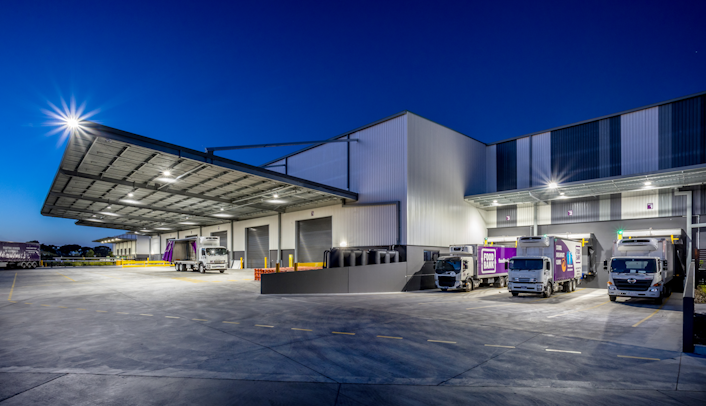
Background
Every day in Victoria, people go hungry. Foodbank Victoria exists to change that – operating as the state's largest food relief organisation, sitting at the critical junction between surplus food and the people who need it most. Across its distribution centres, a relentless flow of donated goods arrives from suppliers, gets processed by volunteers, and is dispatched to the charities and community groups that feed hundreds of thousands of Victorians each year.
With activity volumes rising and the pressure to do more with less growing every year, Foodbank Victoria needed a system built for the speed and complexity of a modern supply chain – one that could keep up with their mission.
The Challenge
Before Mobiledock, Foodbank Victoria's dock operations relied heavily on manual coordination – phone calls, spreadsheets, and group knowledge held together by experienced site teams doing their best under real pressure.
The results were predictable: congestion at peak times, reactive scrambles when vehicles arrived unannounced, and supervisors spending more time firefighting than planning. Communication with the wide ecosystem of carriers, suppliers, charities, and volunteers was inconsistent. And with no real-time picture of what was coming in or going out, getting ahead of problems before they became incidents was nearly impossible.
The core challenges were clear:
- No real-time visibility over inbound or outbound vehicle movements
- Heavy reliance on manual coordination across site teams, drivers, and transport providers
- Reactive, rather than proactive, management of dock congestion
- Time-sensitive freight that left little room for scheduling errors
- A diverse stakeholder base – suppliers, carriers, charities, and agencies – each with different needs and expectations
The Solution
Foodbank Victoria deployed Mobiledock to digitise and standardise how its docks operate – from the moment a booking is made to the moment a vehicle rolls out the door.
The implementation centred on bringing discipline and visibility to every vehicle movement through a centralised digital workflow, replacing manual coordination with structured, automated processes that keep everyone – on-site and off – on the same page.
Key capabilities put to work:
- Inbound and outbound dock scheduling – every vehicle movement planned, structured, and visible, eliminating the guesswork that leads to bunching and delays
- Real-time operational dashboards – supervisors can see exactly what's planned, what's arrived, and what's completed, at a glance, across the full operating day
- Automated notifications and booking updates – carriers and suppliers receive timely, accurate communication without staff having to chase anyone down
- Configurable business rules and workflows – Foodbank Victoria can define how its operation should run and trust that it will, consistently, every day
Results
The change was felt immediately. With a real-time view of dock activity, Foodbank Victoria's site teams shifted from reactive to proactive – anticipating congestion before it happened, balancing dock utilisation across the day, and making faster, better-informed decisions when plans changed.
Administrative load dropped as digital booking and driver check-in replaced the manual processes that had consumed valuable staff time. Communication with carriers and suppliers became faster and more reliable. And the operation gained something it hadn't had before: a consistent, repeatable framework it could grow into, rather than grow out of.
Key outcomes:
- Over 800 movements per month managed through Mobiledock
- Faster, more reliable communication with carriers, suppliers, and community partners
- Stronger operational planning capability and smarter real-time decision-making
- A scalable platform ready to support Foodbank Victoria's continued growth
Conclusion
Better dock management won't make headlines. But for the families and community organisations depending on Foodbank Victoria, a smoother, faster, more reliable supply chain makes a real difference. Sometimes the most important work happens loading docks – not boardrooms.